Ethnic Music Human Computer Co Creation Workshop:
From Music Understanding Models to Artificial Intelligence Music Generation
2026.4.11
Project Members
Liu Zhaorui
Li Zijin
Zhou Ziya
Xue Wei
MY ROLE
Host
TOOLS
GEMINI
SUNO
Apple operation system
(iOS)
(macOS)
(iPadOS)
(visionOS)
SURPPOTED BY
Apple R&D Center
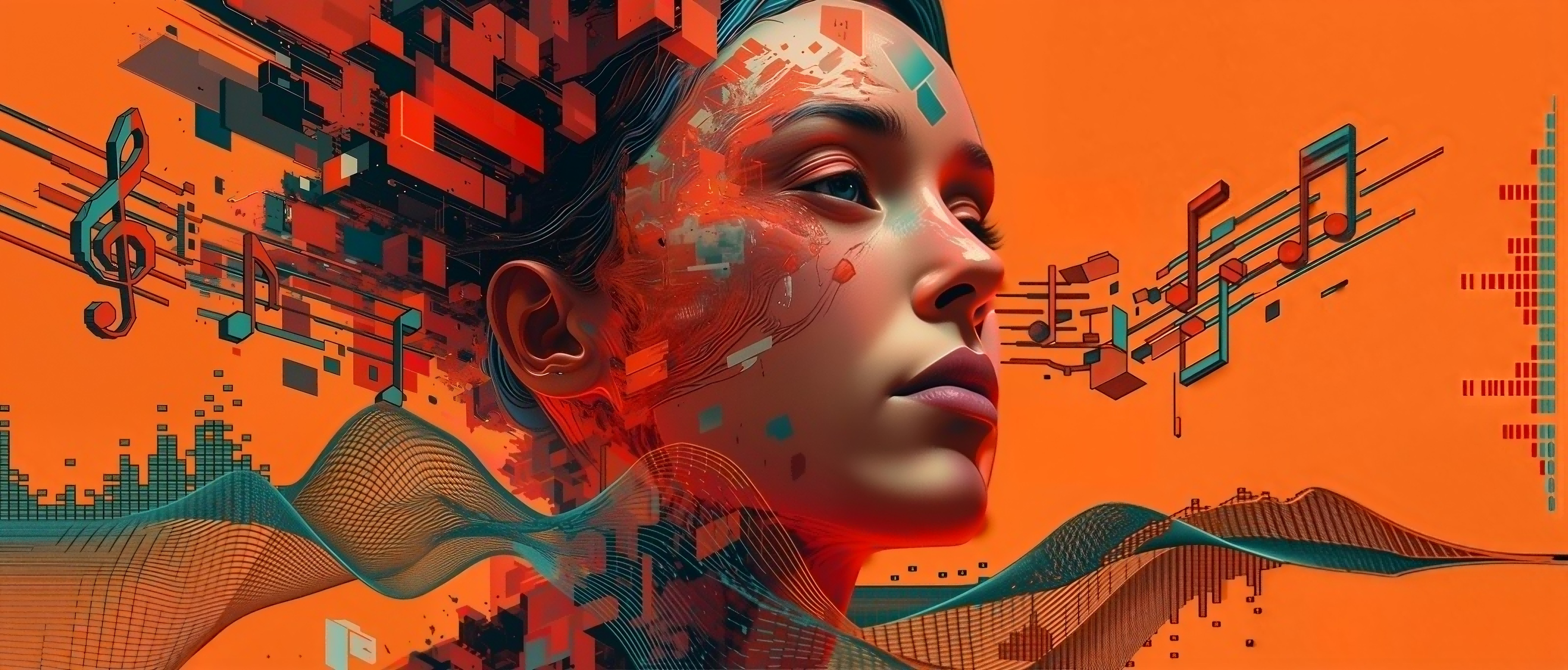
With the rapid development of artificial intelligence technology, the way music creation and sound design are being redefined. At the same time, ethnic music from around the world provides a rich source of inspiration for contemporary music creation due to its unique historical context, cultural context, and aesthetic characteristics. This workshop combines AI music understanding models with generative AI music tools (Suno, Gemini, Mureka, MiniMax Music) to guide participants through a complete creative process from blind listening analysis and understanding to creative reproduction, in order to explore various possibilities of human-machine co creation at the intersection of technology and culture.
Firstly, Dr. Zhou Ziya will introduce the background of the workshop. She pointed out with detailed data that although the current AI music generation market is developing rapidly, the training data of mainstream commercial AI models is highly concentrated on common music genres such as pop and rock in mass communication. The uneven distribution of this data poses a risk of marginalization for ethnic music, which carries cultural diversity, in the vast amount of data. This phenomenon forms a closed loop in which popular genres are repeatedly reinforced with the popularity algorithm mechanism of streaming media platforms. As a result, ethnic music elements such as regional tone systems, rhythmic forms, and timbre characteristics are easily overlooked. At present, this training method based on massive data is difficult to continuously support the cultural diversity needs of music education, creation, and related industries. Based on this, the core topic of this workshop is the role that AI can play in ethnic music creation, and how to design AI tool streams that are more suitable for musicians' creative habits.
In the afternoon, we will enter the practical session. Participants form their own teams and engage in dialogue and co creation with AI systems through a specially developed web interaction platform. The platform has a built-in audio library containing 280 ethnic music genres, covering representative music genres from 56 ethnic groups in China and 37 language regions worldwide. Participants use randomly selected audio as their creative starting point.
The platform integrates the Gemini big language model, allowing participants to obtain music analysis results by uploading audio and text conversations, and generate music clips using the Lyria model. The website interface will guide users to select "Baopu Group" or "Gongyu Group" before creation, and fully record the dialogue content between the user and AI, the generated prompt words (Prompt), and the audio generated at each stage for subsequent research analysis and questionnaire feedback. After the creation is completed, the system provides a music theory reference explanation based on the audio extracted by the user, and guides the user to complete a survey questionnaire about the creative experience.
Grouping settings and creative rules:
Baopu(抱璞) Group uses randomly selected ethnic music audio as the sole source of material, and gradually clarifies the creative path through multiple rounds of Q&A, analysis, and generation cycles with AI models. The implementation of the final work is limited to using tools such as Suno, Gemini, Mureka, or Minimax to test AI's creative conversion ability under strict material source constraints.
Gongyu(攻玉) Group allows participants to introduce their own experiences, aesthetic preferences, creative methods, or self provided audio materials. AI is mainly used for question answering and information organization, with participants taking control of the creative process. This group can further use more professional tools such as Logic Pro for creation, in order to explore the relationship between AI assistance and human creative subjectivity.
After about three hours of concentrated creation, the workshop entered the stage of work sharing and roundtable discussion. The participants presented their co created music works using AI systems, shared their discoveries and confusions during the co creation process with AI, and discussed the shortcomings of current AI models in ethnic music processing.
In the lively collision of ideas and sharing of works, the "Ethnic Music Human Computer Co Creation Workshop" came to a successful conclusion. This event is not only an experimental music creation practice, but also triggered deep thinking on issues such as the positioning of technical roles, the transformation of creative methods, and the reconstruction of human-machine relationships. Participants found in practical operations that introducing ethnic music materials into AI semantic parsing and generation frameworks can not only produce diverse styles of music works, but also help recognize the threshold of technological tools and the boundaries of creators' own creative methods. This exploration provides a certain practical reference for the innovation and inheritance of ethnic music in the AI era.